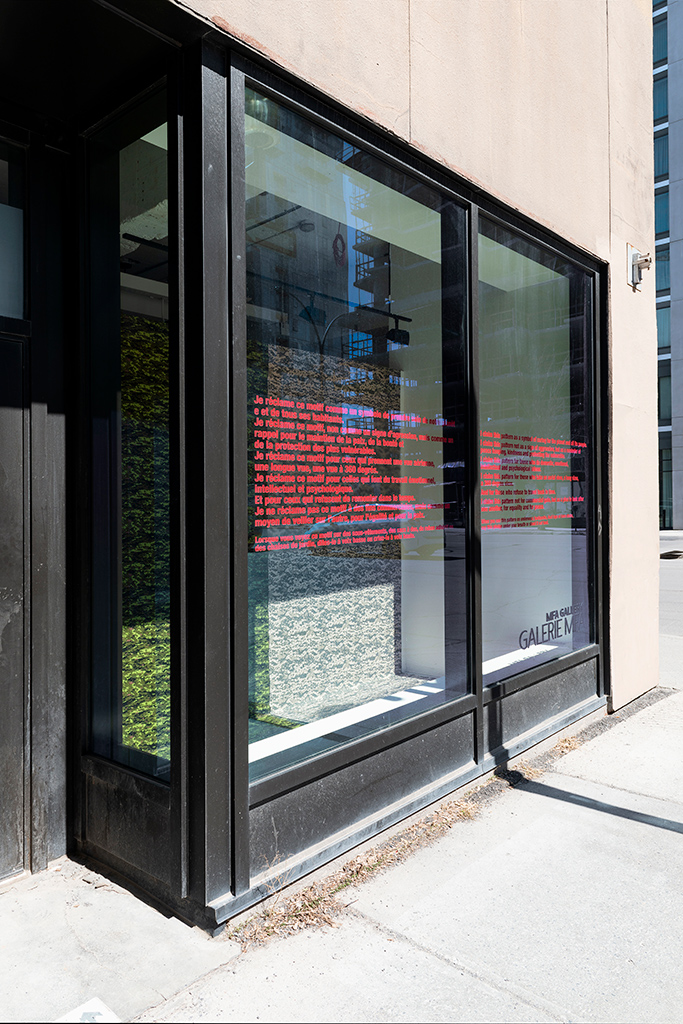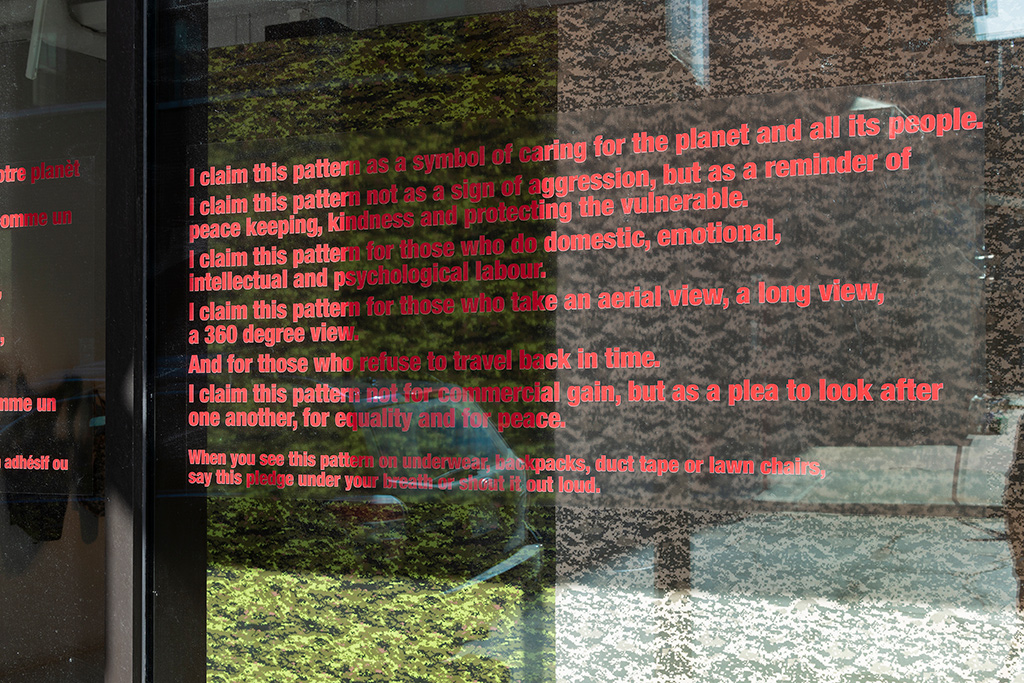
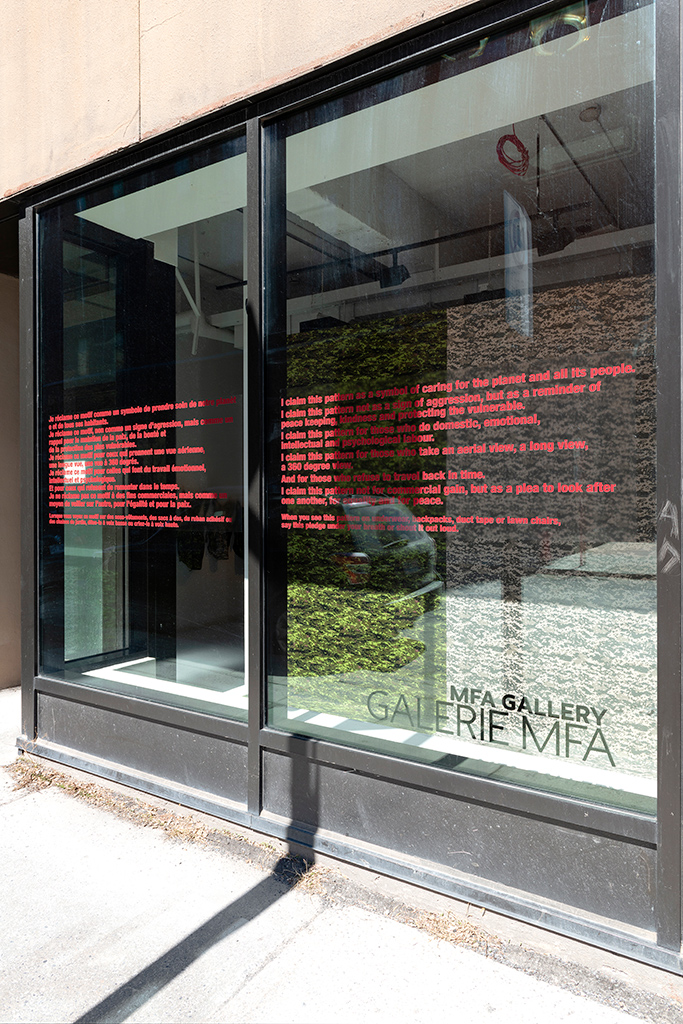
Introduced by the government in 1998, Canadian Disruptive Pattern (CADPAT) camouflage was the first of its kind designed post-Gulf War. Adopted internationally, the pixelated camouflage pattern was an attempt to address new technologies in warfare by imitating the snow on a television screen receiving no signal. For twenty years, the sharp-edged, square pixels differentiated official military camouflage from patterns first appropriated ironically by anti-war and counter-culture revolutionaries in the 1970s and 80s, and then embraced by artists, designers and fashionistas in the decades to follow. Old camouflage, now in a rainbow of colour palettes, is seen everywhere from yoga pants to home décor to protesting police officers. In 2018, the CADPAT patent expired and restrictions on non-military use of the pixelated pattern were lifted. Instantly and without irony, this pattern is becoming normalized.
In an era of aerial and digital warfare, multinational military forces, home-grown terrorism and unprecedented domestic surveillance, contemporary camouflage references complex notions of power and authority, visibility and invisibility for military personnel and civilians alike. Does the swift commercial integration of CADPAT is simply tame camouflage’s fraught meanings through fashion, art and everyday use or does this integration instead reflect domestic battle grounds, glorification of war and an acceptance of an increasing presence of militarization in daily life.
Pledge is an attempt to (re)claim the meaning of this pixelated camouflage pattern. In a site often used for advertising, the window vitrine is a platform for the passer-by. Incorporating the language of nationalism through a pledge of allegiance, viewers are invited to join in the process of reclamation or to at least think about what the civilian integration of CADPAT might mean.