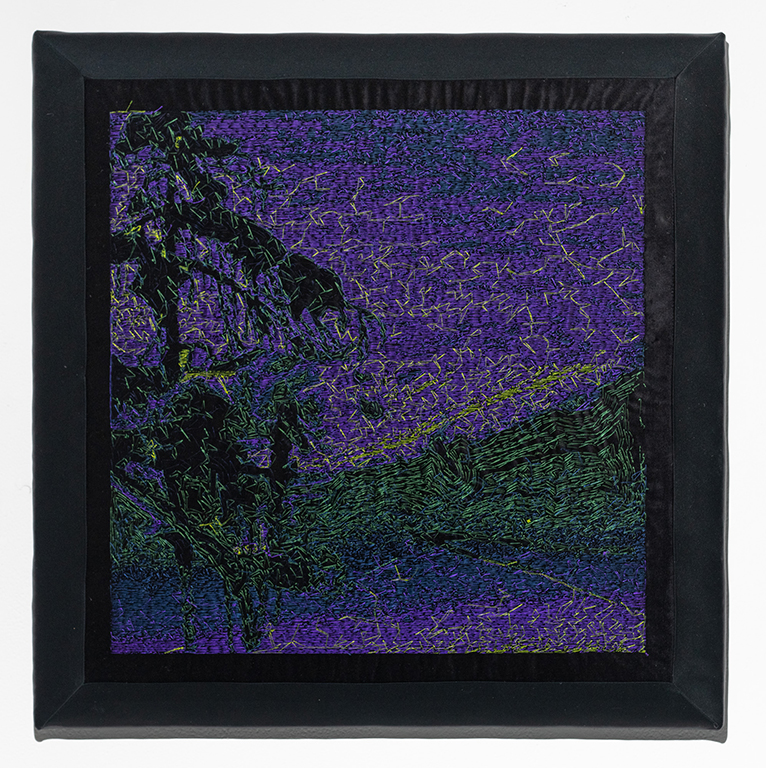
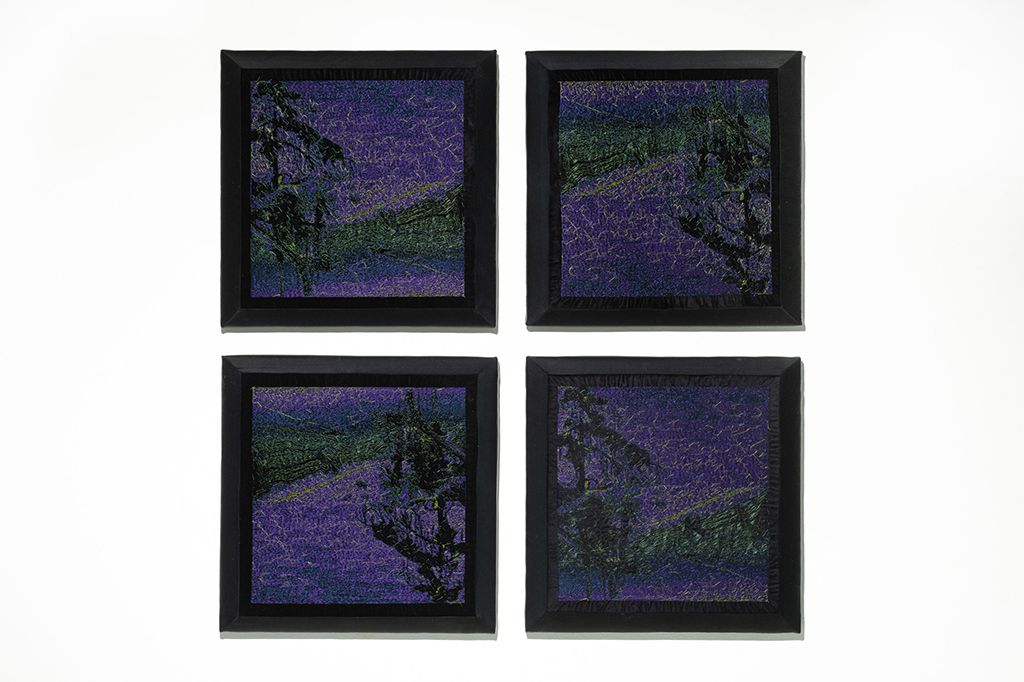
Using images gleaned from art historical archives, as well as contemporary stock photography, corporate promotional material, and government trade and tourism documents, I collage composite landscapes to be replicated with digital embroidery.
In my most recent body of work, vistas of industrial or extraction sites such as Ekshaw, Hibernia, Sarnia and Fort McMurray are embroidered on black velvet. Based on existing images, these vistas emulate classic Canadian landscapes famously produced by the Group of Seven (and subsequent artists), only with a cement plant or oil refinery nestled into the pristine environment and reflected in still waters. The digital embroideries are designed to imitate delicate hand-stitching, but the process has the capacity for mass reproduction and dissemination much like the source images that are referenced.
The embroidery process is achieved on a Tajima (a large-scale, industrial embroidery machine) and by forcing the multi-needled giant to reckon with complex, blown-up stitch patterns to produce a single image at a time. The resulting embroideries approximate the meandering brushstrokes and textures of painting, nodding back to historical artworks paradoxically used to portray a young, industrializing nation at home and abroad. The images are embroidered with colour palette of a bruise or oil spill that is simultaneously attractive and repellent. This palette can be difficult to see on black velvet and shine of the threads and multi-directional stitches require an attentive eye for viewing. Leaning into the dichotomy of luxury and kitsch associated with black velvet, I also use the light reflecting and absorbing properties of the velvet’s nap to obscure the image. Each embroidery is finished with a black satin “frame” and is slightly upholstered.
Under the guise of decorative arts, I use digital technology, appropriated images, textiles, and embellishment to critique a problematic national identity and challenge inequitable and destructive visions of progress.
Photography: Paul Litherland