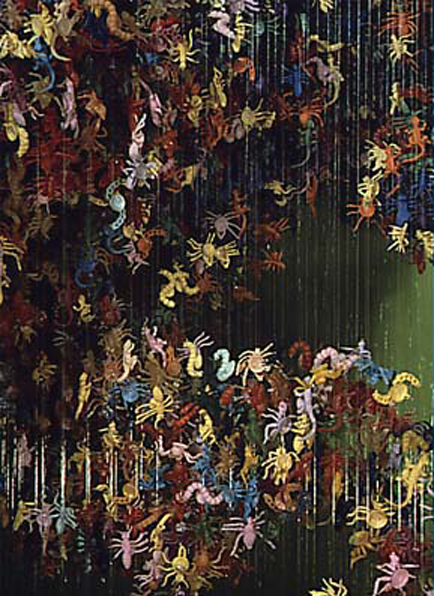
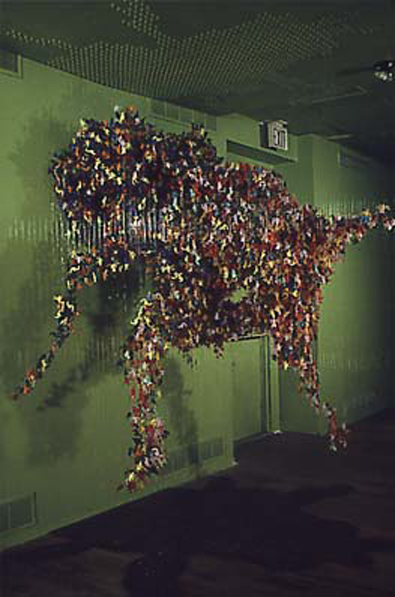
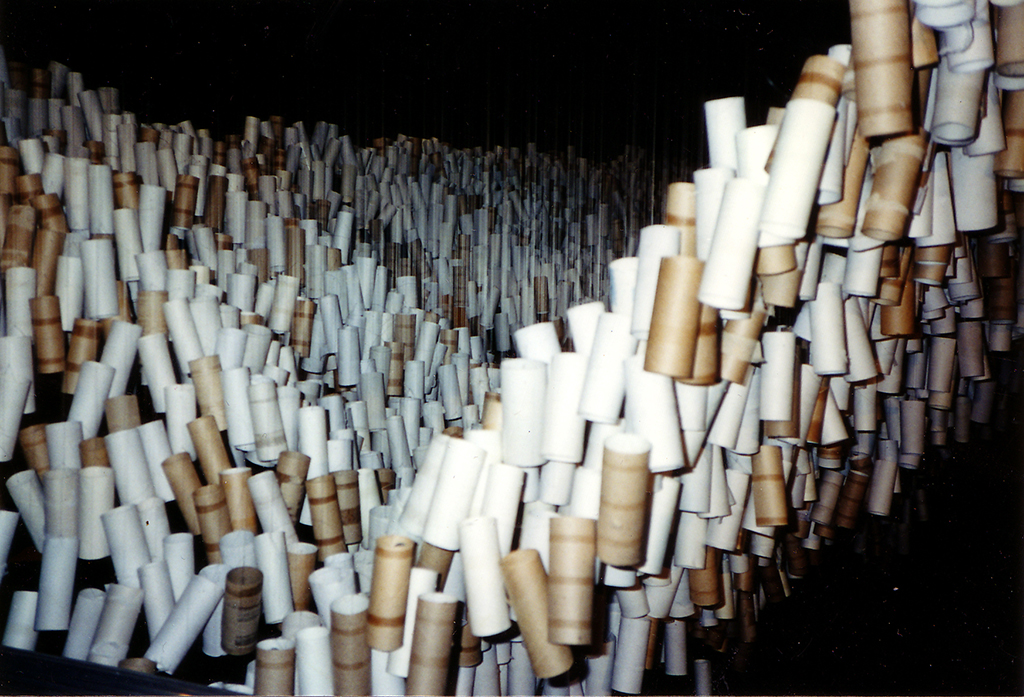
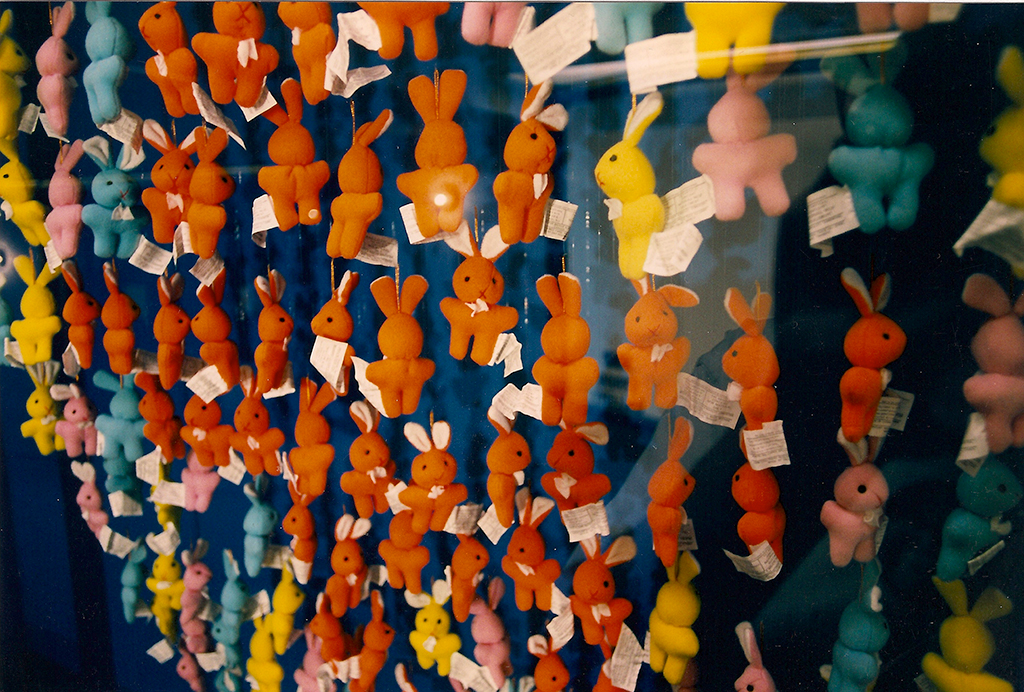
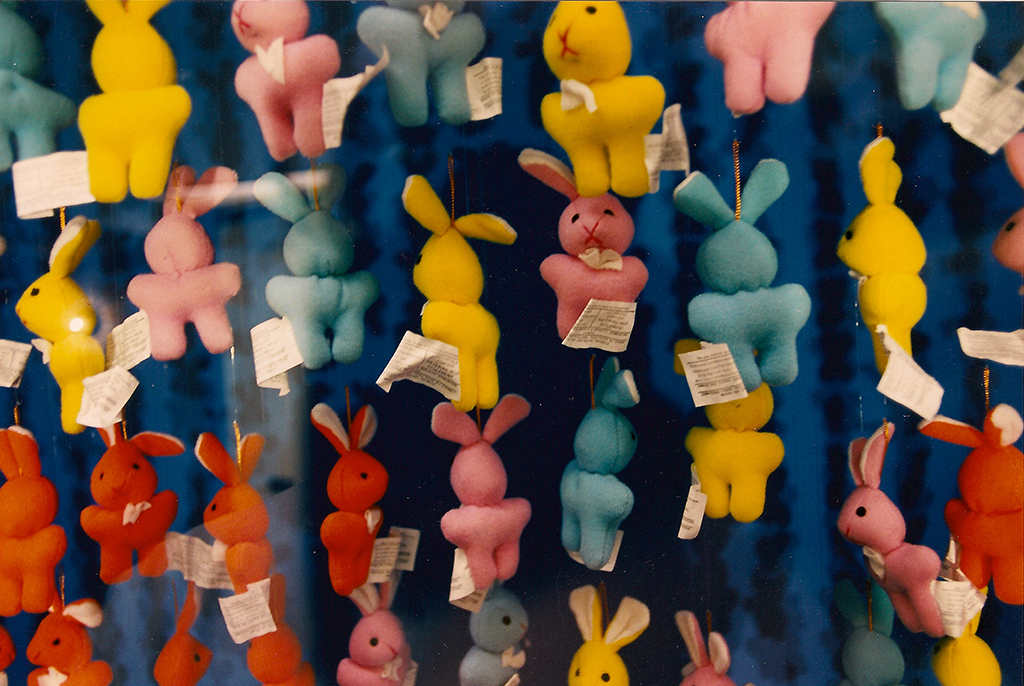
Medium: Rubber bugs, wood, metal hooks, filament Dimensions: 120″ x 96″ x 60″ | 305 x 244 x 152 cm
Photography: Trevor Mahovsky
Note: Built on-site in 4 days with a crew of friends and family, the work was cut apart and materials reused for Entomology (V2) in 1995 at the Edmonton Art Gallery (now the Art Gallery of Alberta)
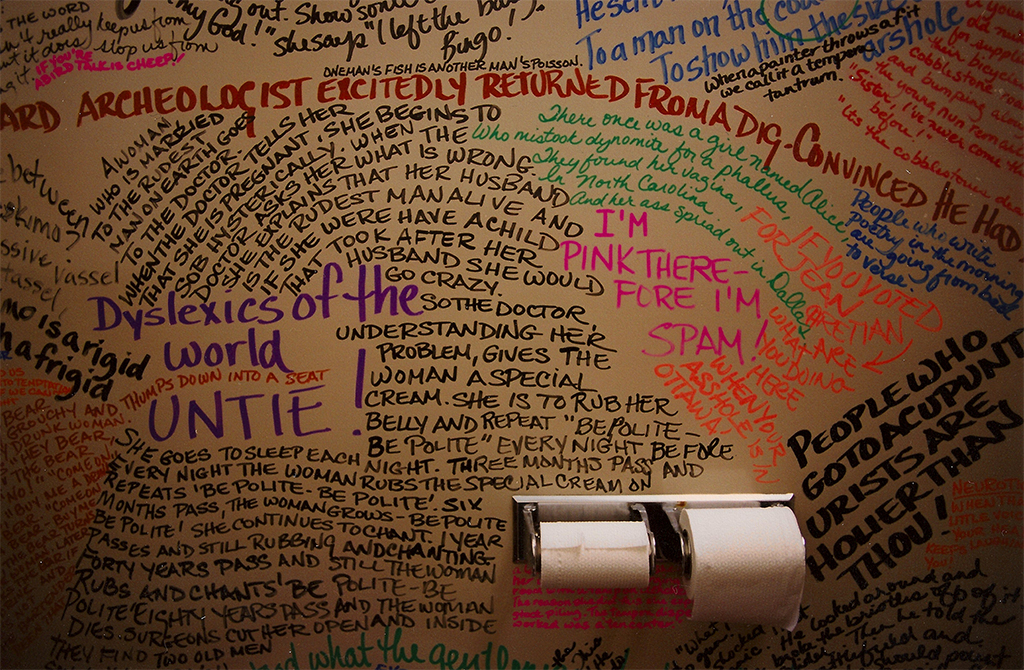
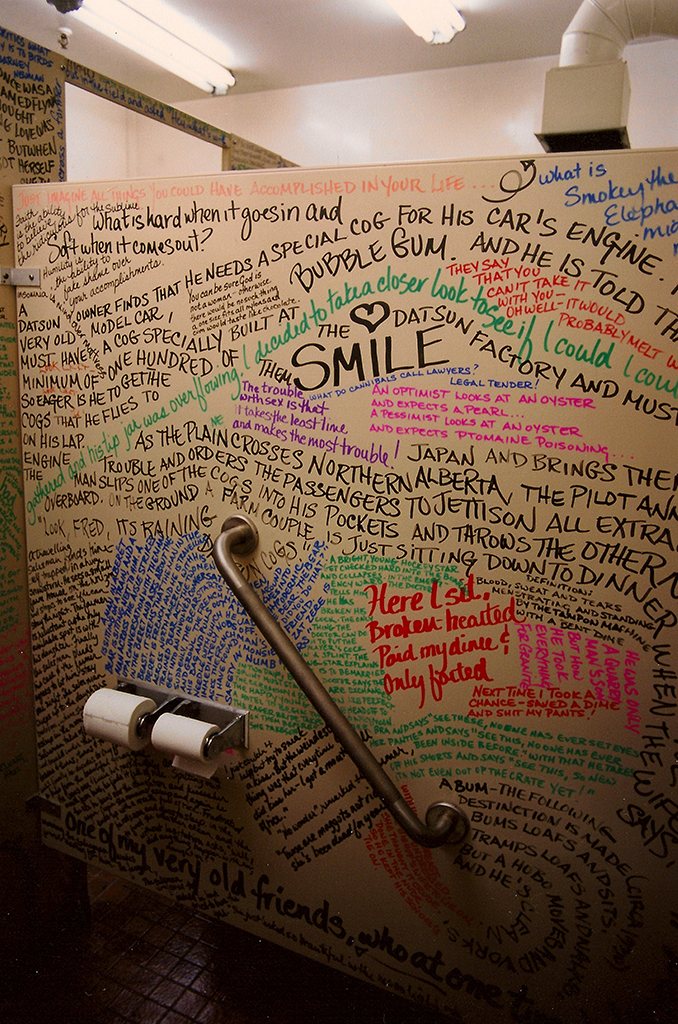
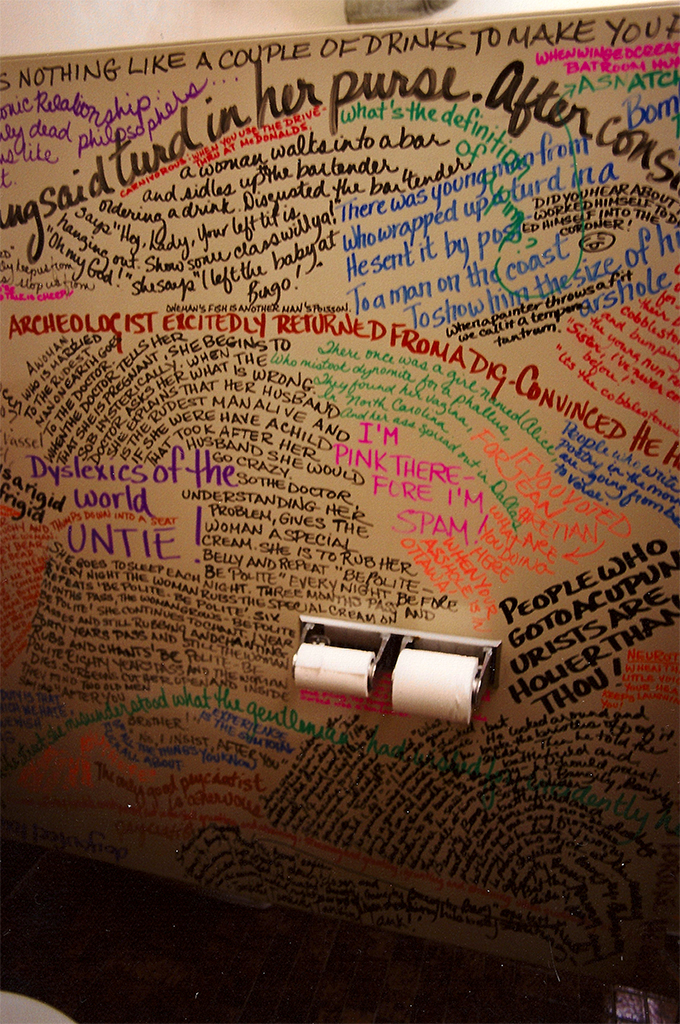
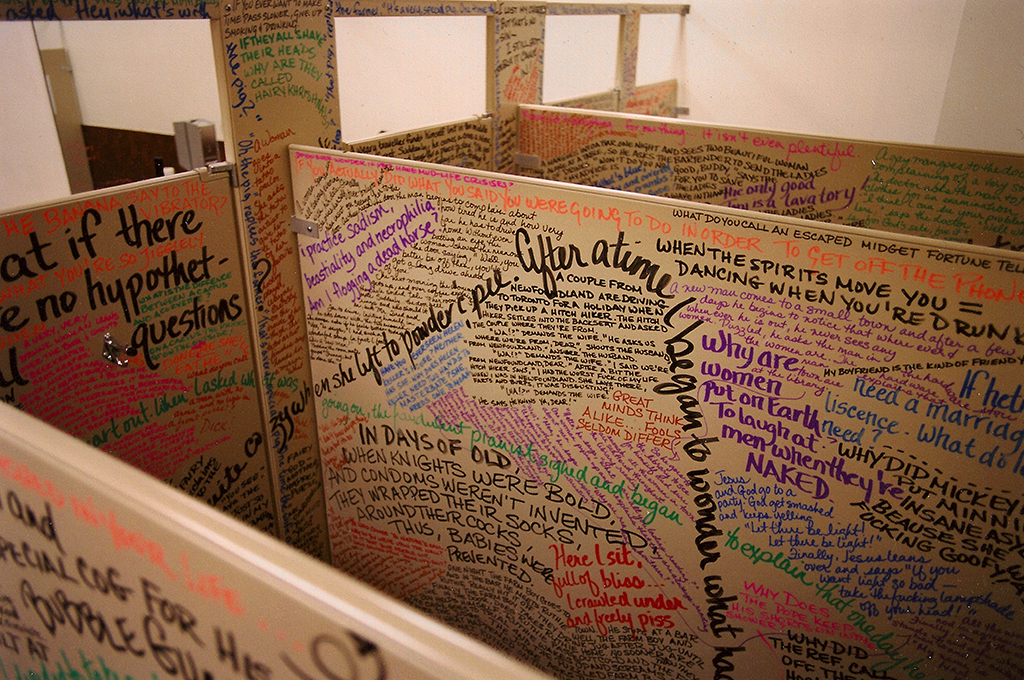
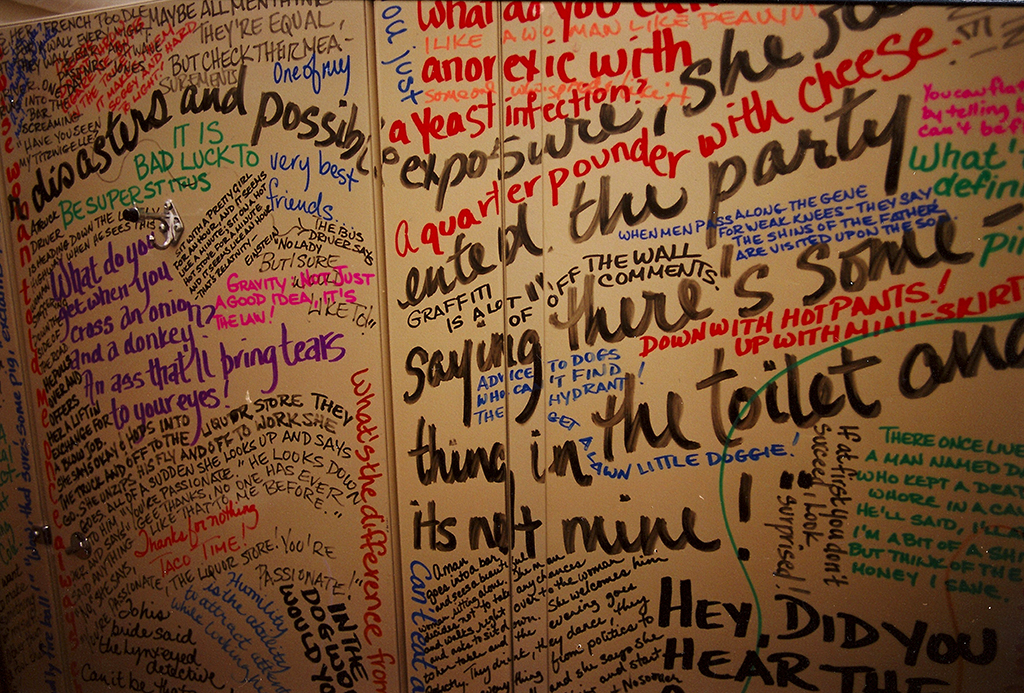
Borderlands, organized by artists, Janet Hardy & Katie McKelvey In an empty office tower floor, Calgary, AB
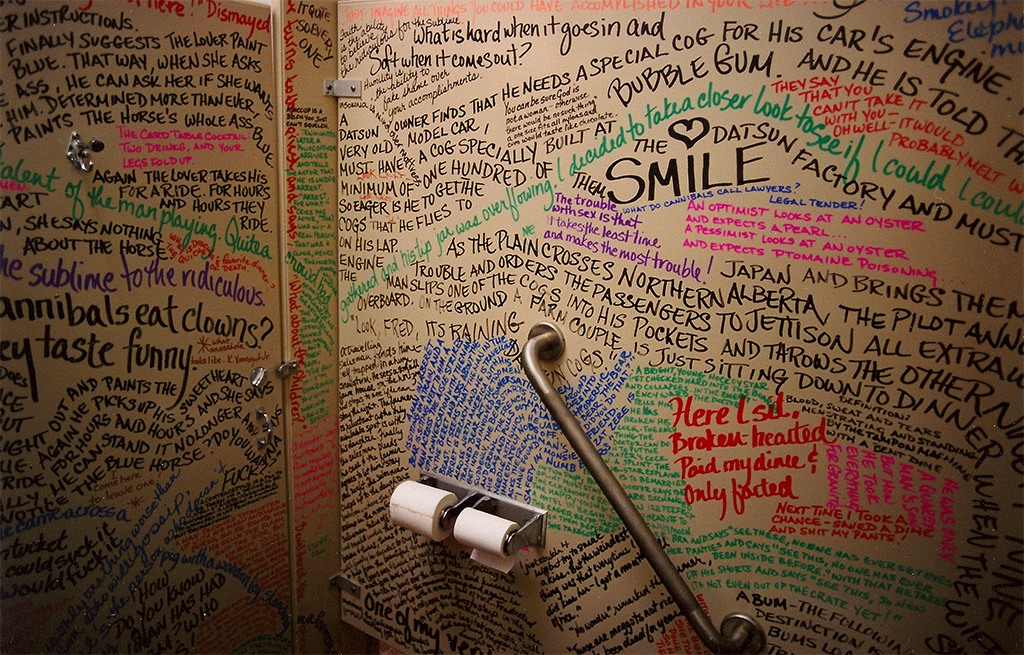
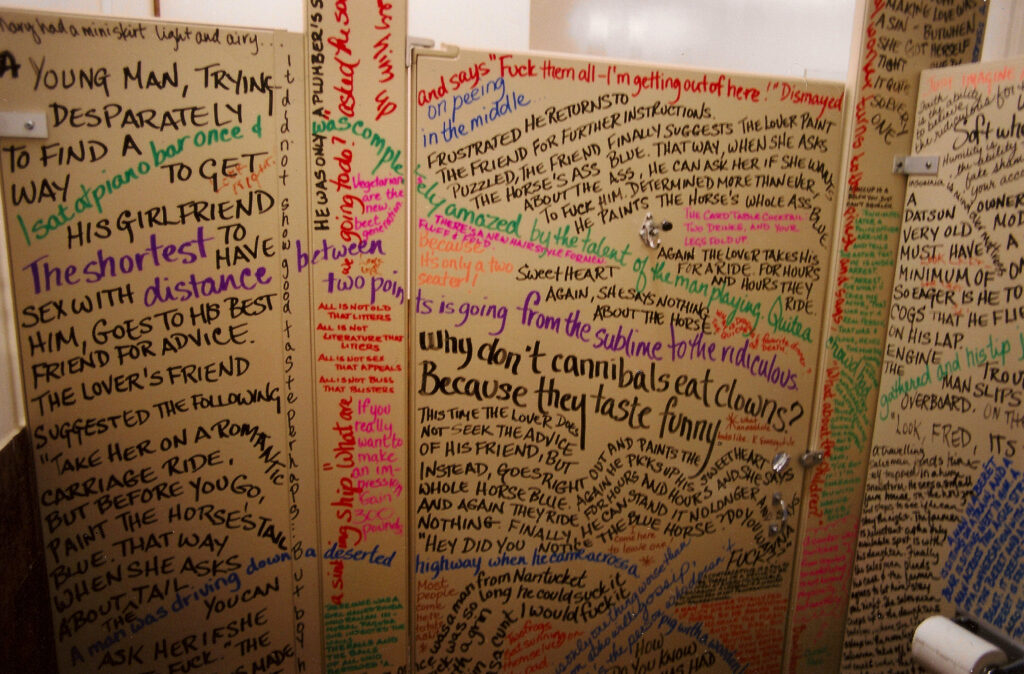
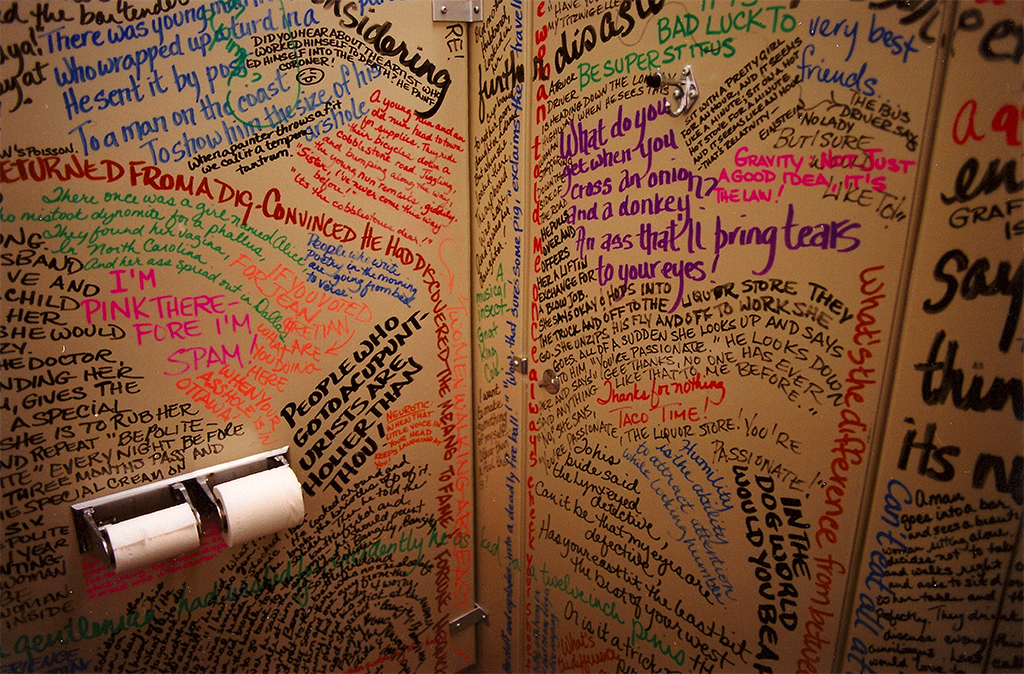
Description: Exhibiting artists draw allotments of space in the empty office tower floor. Unsuccessful artists are encouraged to participate in other ways, passively or aggressively. Squatting in the ladies room, allowed a temporary intervention in the public/private space.
Medium: Bathroom graffiti, in washable ink, covers the interior of each cubicle for the duration of the exhibition. Text based on observation and anecdotal research in downtown Calgary nightspots, public washrooms and spaces.
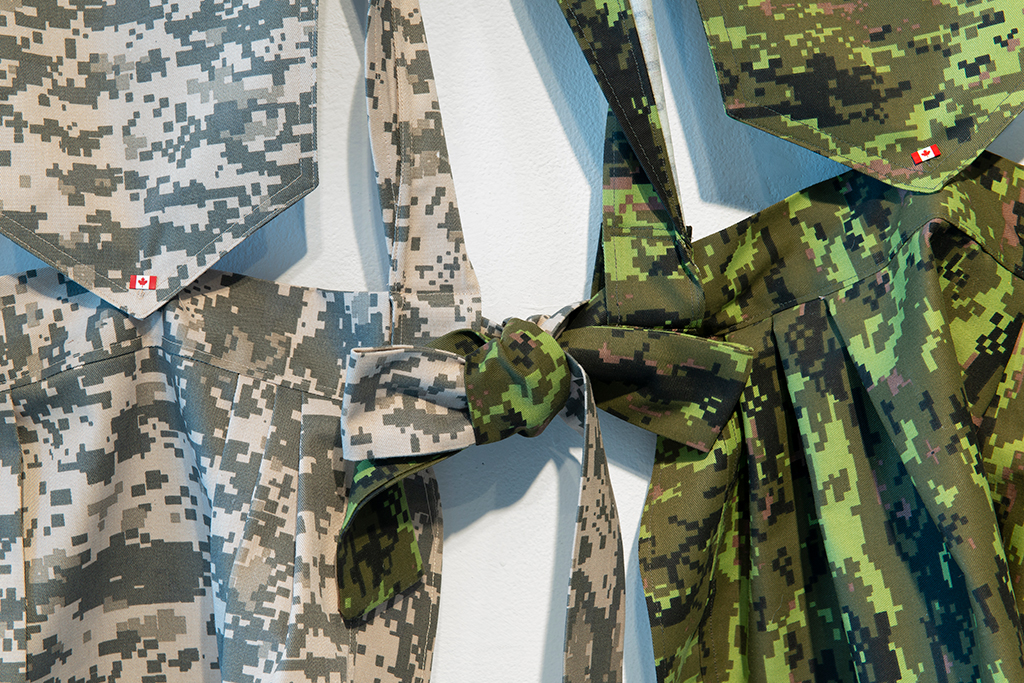
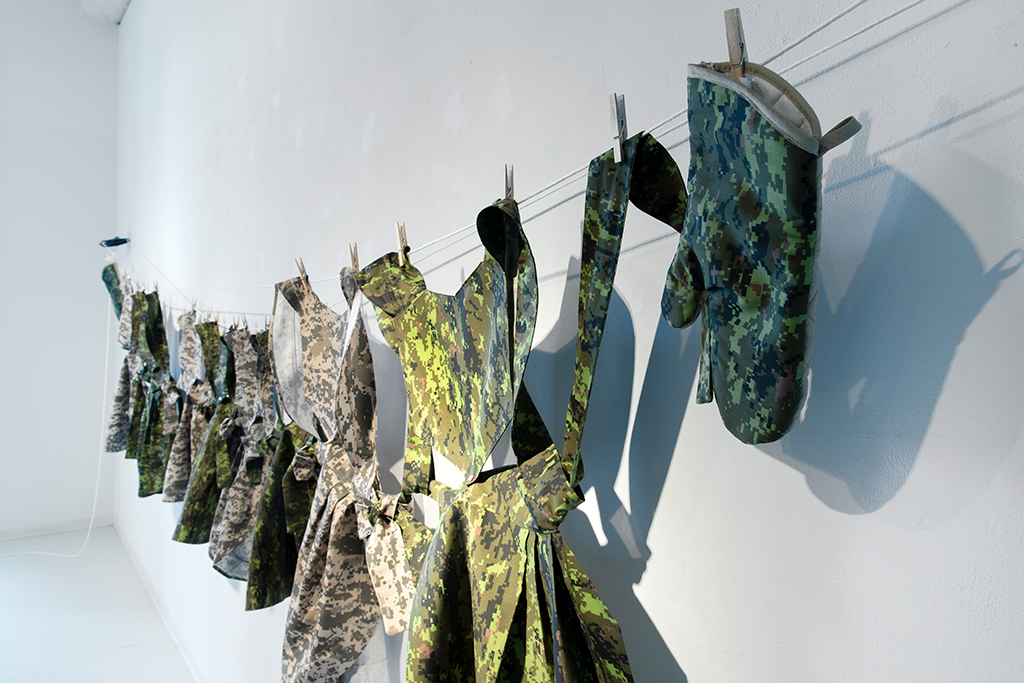
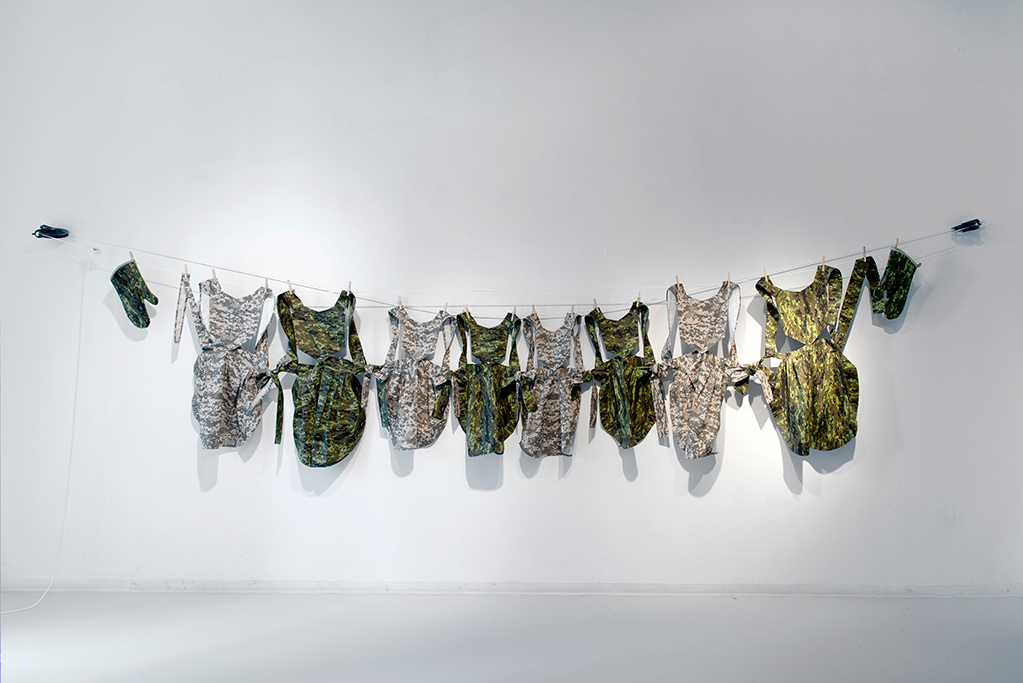
Dimensions: variable, 4 large & 4 small sized aprons, oven mitts
Medium: Aprons made from altered, open-source pattern on a clothesline
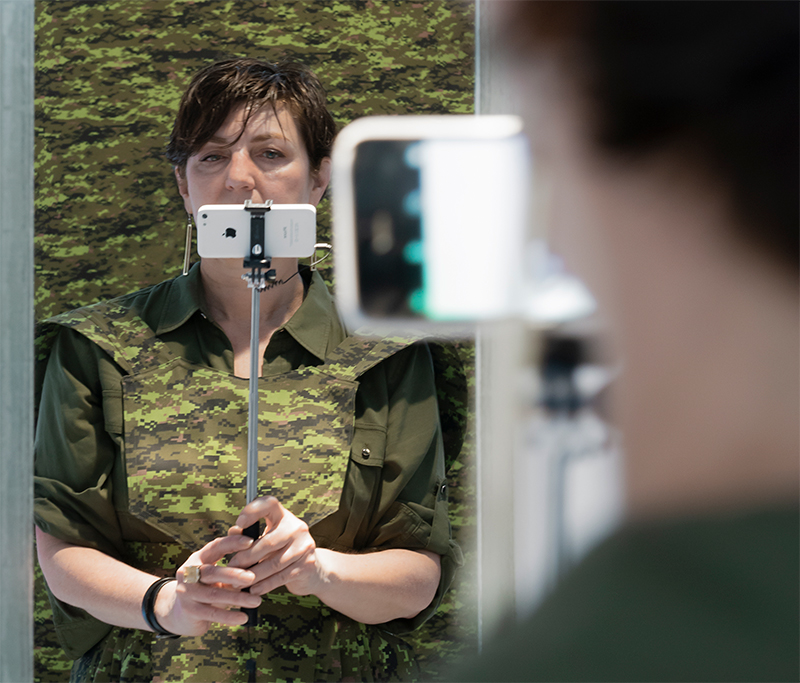
Introduced by the government in 1998, Canadian Disruptive Pattern (CADPAT) camouflage was the first of its kind designed post-Gulf War. Adopted internationally, the pixelated camouflage pattern was an attempt to address new technologies in warfare by imitating the snow on a television screen receiving no signal. For twenty years, the sharp-edged, square pixels differentiated official military camouflage from patterns first appropriated ironically by anti-war and counter-culture revolutionaries in the 1970s and 80s, and then embraced by artists, designers and fashionistas in the decades to follow. Camouflage, now in a rainbow of colour palettes, is seen everywhere from yoga pants to home décor to protesting police officers. In 2018, the CADPAT patent expired and restrictions on non-military use of this camouflage pattern were lifted. Instantly and without irony, this pattern is becoming normalized.
In 2018, I moved to Montréal and began again. Three garage sales, gifts to the willing (and unwilling), and the occupation a hidden corner of my parents’ basement and a lifetime of household and studio items were gone.
What came with me was pared down to a partial truck of books and sequins. I arrived at my furnished 3 1/2 with three suitcases and two cats.
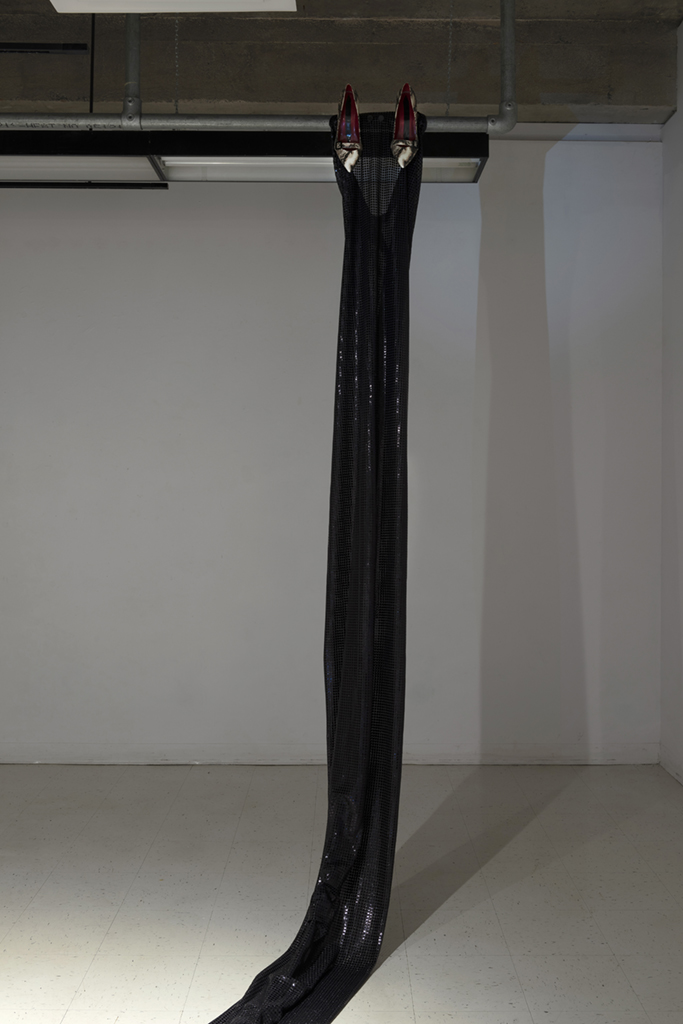
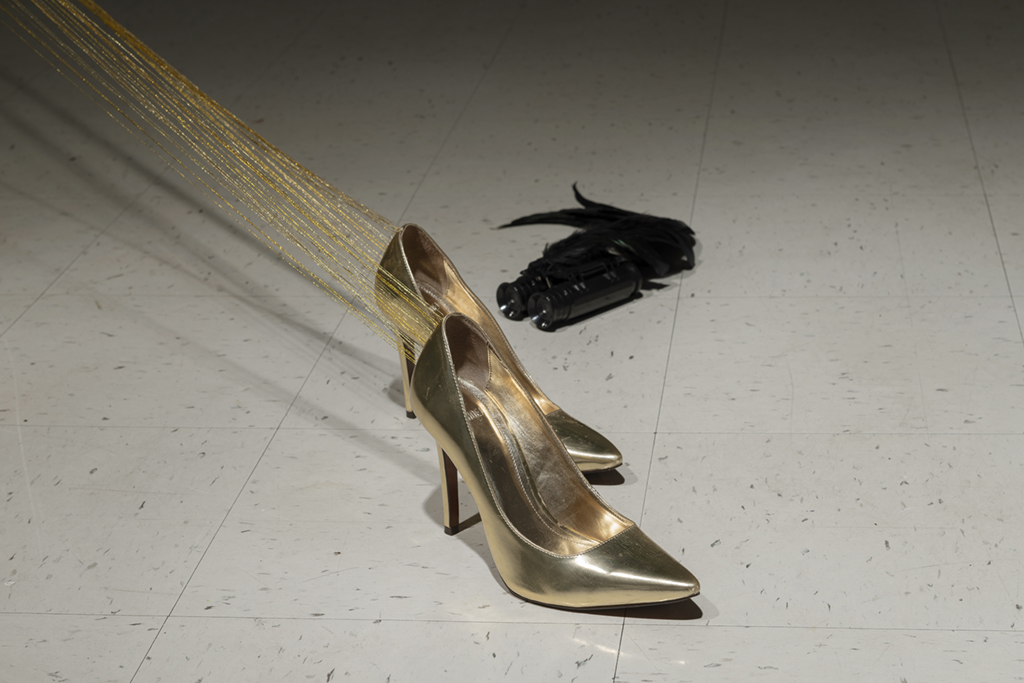
When the truck arrived, I had a month in the city and at school under my belt. I began working with curious choices that had survived the purge and were put in a box during my blurry panic. Golden stilettos were laughable, as was the collection of used dryer sheets. The sequinned fabric was bought at a Turkish market in Berlin, the snakeskin shoes came from London. The Hunters, a gift from a friend, were too small and the vintage feathers came from a great-aunt who made hats. And so I flipped from teacher to student and tried to figure out what I had done.
Introduced by the government in 1998, Canadian Disruptive Pattern (CADPAT) camouflage was the first of its kind designed post-Gulf War. Adopted internationally, the pixelated camouflage pattern was an attempt to address new technologies in warfare by imitating the snow on a television screen receiving no signal. For twenty years, the sharp-edged, square pixels differentiated official military camouflage from patterns first appropriated ironically by anti-war and counter-culture revolutionaries in the 1970s and 80s, and then embraced by artists, designers and fashionistas in the decades to follow. Old camouflage, now in a rainbow of colour palettes, is seen everywhere from yoga pants to home décor to protesting police officers. In 2018, the CADPAT patent expired and restrictions on non-military use of the pixelated pattern were lifted. Instantly and without irony, this pattern is becoming normalized.
In an era of aerial and digital warfare, multinational military forces, home-grown terrorism and unprecedented domestic surveillance, contemporary camouflage references complex notions of power and authority, visibility and invisibility for military personnel and civilians alike. Does the swift commercial integration of CADPAT is simply tame camouflage’s fraught meanings through fashion, art and everyday use or does this integration instead reflect domestic battle grounds, glorification of war and an acceptance of an increasing presence of militarization in daily life.
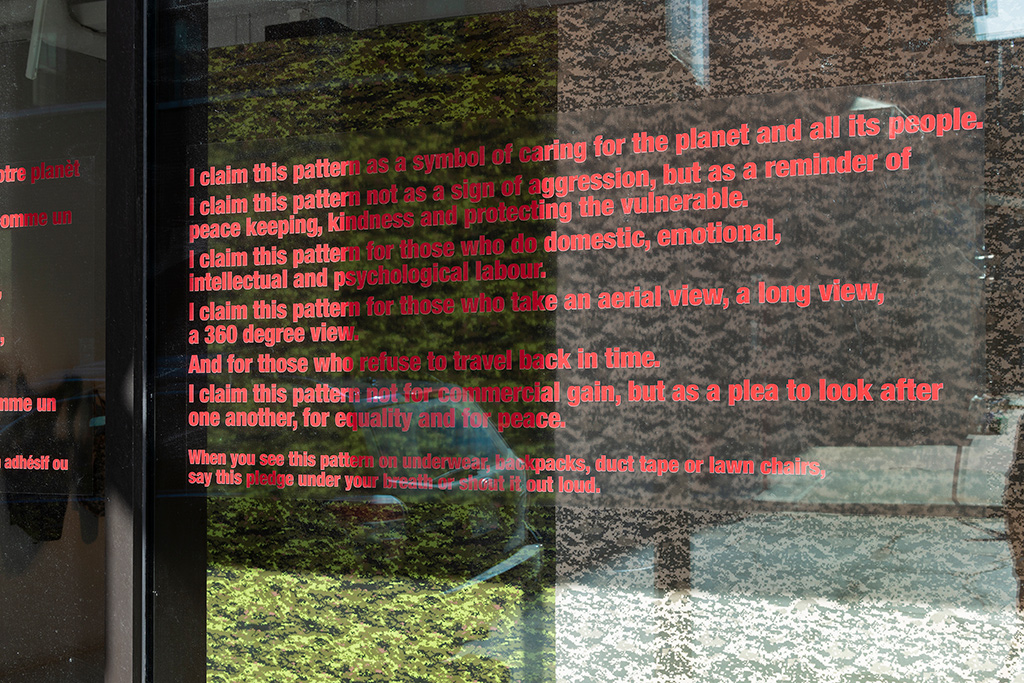
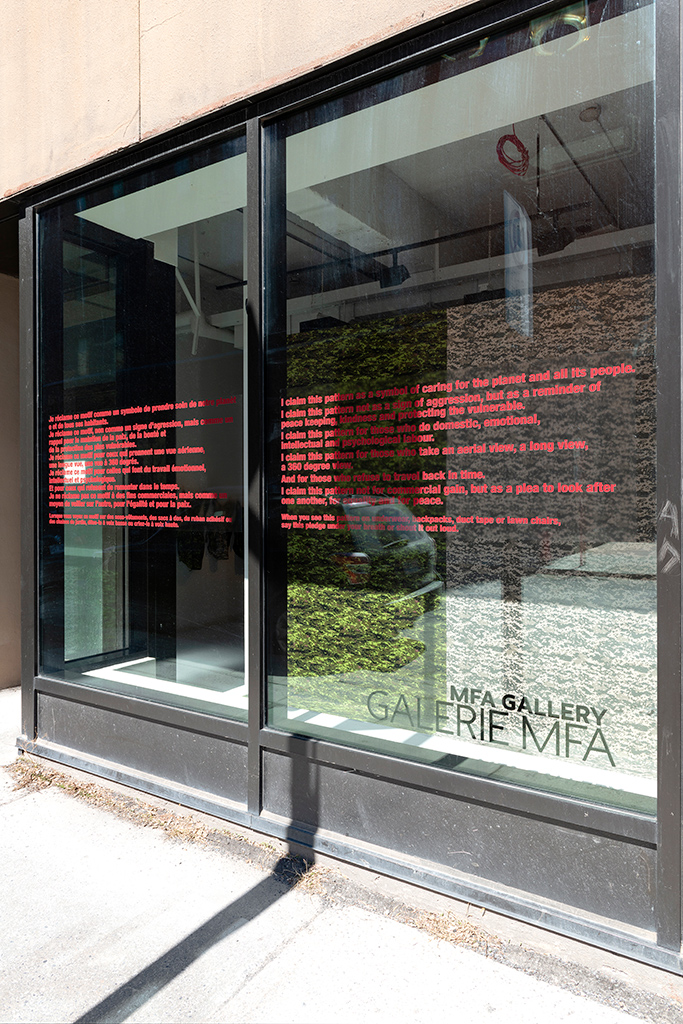
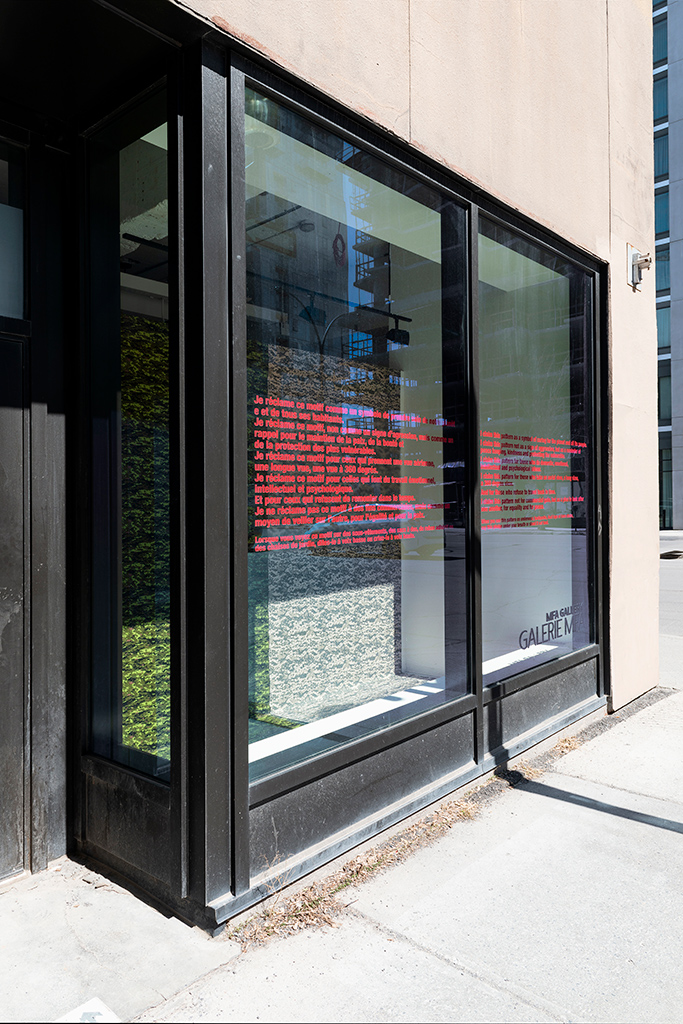
Pledge is an attempt to (re)claim the meaning of this pixelated camouflage pattern. In a site often used for advertising, the window vitrine is a platform for the passer-by. Incorporating the language of nationalism through a pledge of allegiance, viewers are invited to join in the process of reclamation or to at least think about what the civilian integration of CADPAT might mean.
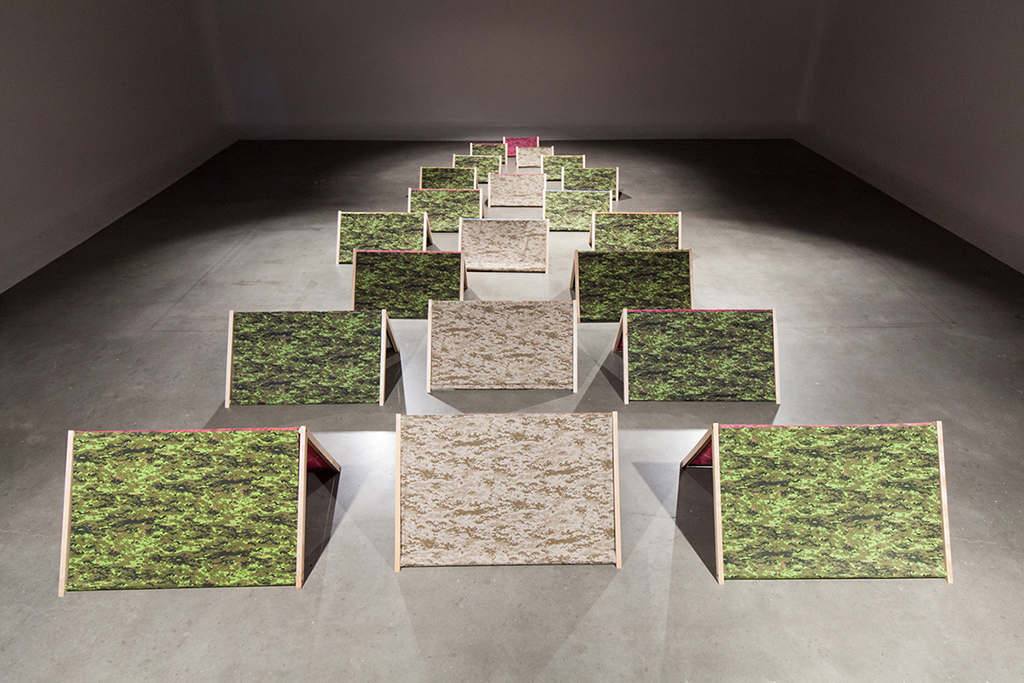
Twenty-one pup tents in diminishing sizes that occupy floor space. Too small to provide human shelter, the tents become decoration or toys. The troop of pup tents are made with contemporary, digital-patterned camouflage and create two vistas.
From one side of the installation, a field of green rectangles is cut through by a path of beige that mimics compositions of illusory depth common in landscape painting. The digital camouflage also imitates frontal and aerial perspectives of the landscape while referencing political, economic, and environmental shifts resulting from warfare.
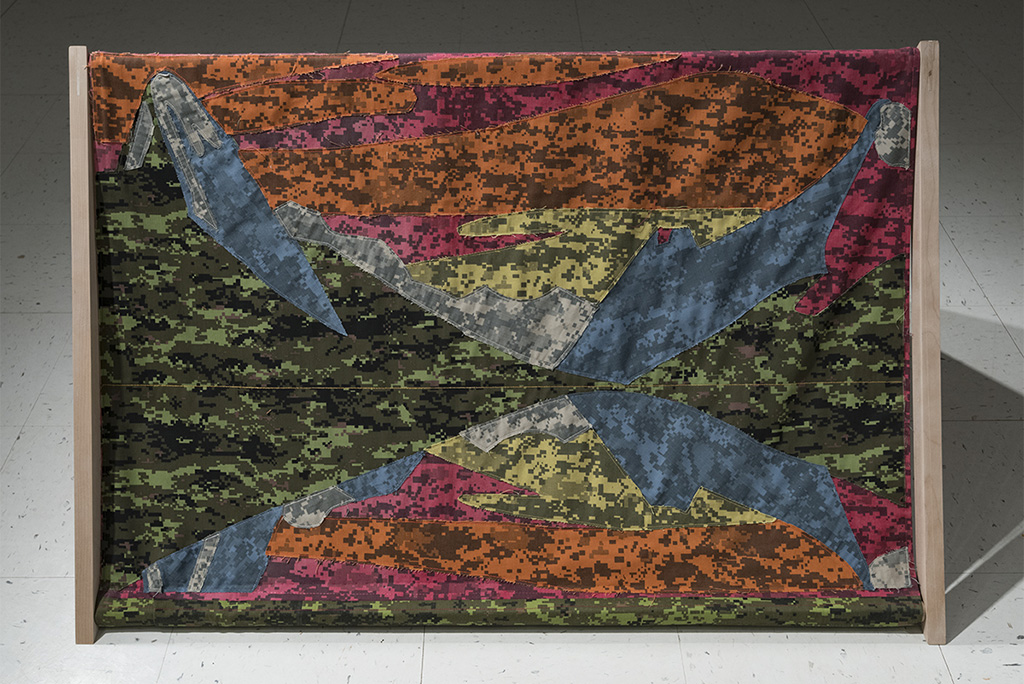
Repeated images, based on Canadian landscape painter Lawren Harris’ iconic 1924 work, Maligne Lake, adorn the other side of the tent flaps. This image and several others painted by members of the Group of Seven gained emblematic status due in part to a propaganda campaign launched in WWII. In collaboration, the Toronto-based Sampson Matthews Print Company and the budding National Gallery of Canada distributed prints of landscape paintings to military bases, field hospitals, and diplomatic offices across Europe and Asia. These images of vast, uninhabited wilderness served to remind soldiers of what they were fighting for and signified home with endless potential. The images were so popular that after the war, prints were sold domestically to decorate schools, hospitals, libraries, firehalls and other public buildings until the late 1960s. This dissemination, the most successful Canadian public art program to date, established a visual brand for a young nation newly inaugurated on the world stage and eager to embark on a program of post-war industrialization.
Commercially available camouflage fabric in forest green & arid beige, hand-dyed camouflage in red, blue, orange, & yellow, wood tent frames and dowels
Flat-pack pup tents with appliquéd image based on Harris’ Maligne Lake